
episodes

264
June 15, 2022
The Smallest Hills We'd Die On
The book is always better than the movie. Brunch is dumb. And wind chimes are mean. We asked you about the smallest hills you have died on—the issues you just won’t wave the white flag for no matter what. And we came across some fightin’ words.

June 13, 2022
Ask Margaret: Picky Eater Update!
Margaret gives an update on her famously picky eater. Does the kid who once rejected almost every food except pizza now eat a wider range of foods? Tune in to find out!

June 10, 2022
Fresh Take: Kate Swenson of "Finding Cooper's Voice" on Parenting Autism
Kate Swenson started “Finding Cooper’s Voice”while searching for answers after her son’s autism diagnosis. Her book FOREVER BOY is about Kate’s journey to acceptance, and how sharing her own family’s triumphs and challenges became a road to advocacy.

263
June 8, 2022
Brave Parenting in a Scary World
Brave parenting doesn’t mean acting like what’s happening in our world isn’t scary, or that we must present our kids with perfect solutions. It means meeting our kids where they are, discussing their feelings, then deciding together what to do next.

June 6, 2022
Ask Amy: How Can I Get Out of My Mom Funk?
When we’re overwhelmed by the 24/7/365 nature of parenting, we tend to blame ourselves for being in a “mom funk,” and look to attitude adjustment as the best solution. In response to this listener question Amy suggests that it’s the workload that might need adjusting, more than the mindset.

June 3, 2022
Best Of: Dr. Lynyetta Willis on Breaking Out of "Stable Misery"
Ever felt like things are going pretty well but happiness is missing from your parenting and relationships? In this “Best Of” episode, Dr. Lynyetta Willis discusses "stable misery" and explains how we can create more joyful harmony in our lives.

262
June 1, 2022
Mom Rage
Mom rage engenders debilitating shame. Where did it come from? Are we actually the worst parent who’s ever parented? But mom rage has common triggers and a predictable path along which it builds- which also means there are things we can do about it.

May 27, 2022
BEST OF: Handling the News With Our Kids
When the unthinkable happens, how are we supposed to explain it to our children? What do we say, when are they old enough, how do we answer their questions without making them more frightened? In this episode recorded in July 2021, Amy and Margaret discuss how to handle the news with our kids.

261
May 25, 2022
Introverts vs. Extroverts (and Making Room for Both in Your Family)
Are you an Amy or a Margaret? AKA: are you an introvert or an extrovert? Turns out, you can enjoy socializing but still be an introvert or require some alone time but still be an extrovert. And there are ways to raise kids who are the opposite of you.

May 23, 2022
Ask Amy: My Kid Is Screaming Like a Banshee All of a Sudden
What is with the turn-on-a-dime switch from the sweet, demure kid we had yesterday to the demon who woke up today? Is something really wrong or is this a phase? Here’s how to help your kids through the inevitable “red brain” stages of disequilibrium.

May 20, 2022
Fresh Take: Matthew Fray on Strengthening Our Relationships
We’ve all left dishes by the sink. Either that, or we’ve yelled at our partner for doing so. In this episode, Matthew Fray explains how leaving dishes by the sink caused his marriage to implode—hint: it wasn’t just about the dishes.

260
May 18, 2022
Unwelcome Surprises
What unwelcome surprises have you experienced on your parenting journey? We asked our listeners to tell us what they didn’t expect when they first started out, and they listed everything from torturous theme days to baby headbutts.

May 16, 2022
Ask Margaret: Should I Force My Kids to Give Hugs?
We all have relatives who demand big bear hugs when saying goodbye. That may all be well and good for some kids, but what if our kids just aren’t huggers? Margaret discusses how to protect kids’ autonomy while keeping the peace with Grandma.

May 13, 2022
Fresh Take: Lynn Lyons and Robin Hutson of "Flusterclux"
When anxiety is part of family systems, our well-meaning attempts to assuage kids can instead serve to further reinforce it. Psychologist Lynn Lyons and Robin Hutson, co-hosts of the podcast Flusterclux, explain what actually works for anxiety.

259
May 11, 2022
Will We Ever Get Back to Normal?
When will things go “back to normal"? Is that even a question we should be asking ourselves anymore? How do we learn to live with a new normal? Amy and Margaret ponder over how to keep running a race where the finish line keeps moving.

May 9, 2022
Ask Amy: Am I a Terrible Person for Being Jealous of My Mom Friends?
When others have easier experiences of parenting than we do, it's easy to get jealous. But is that wrong? Amy responds to a listener struggling with envy towards friends whose births and postpartum experiences were far easier than hers.
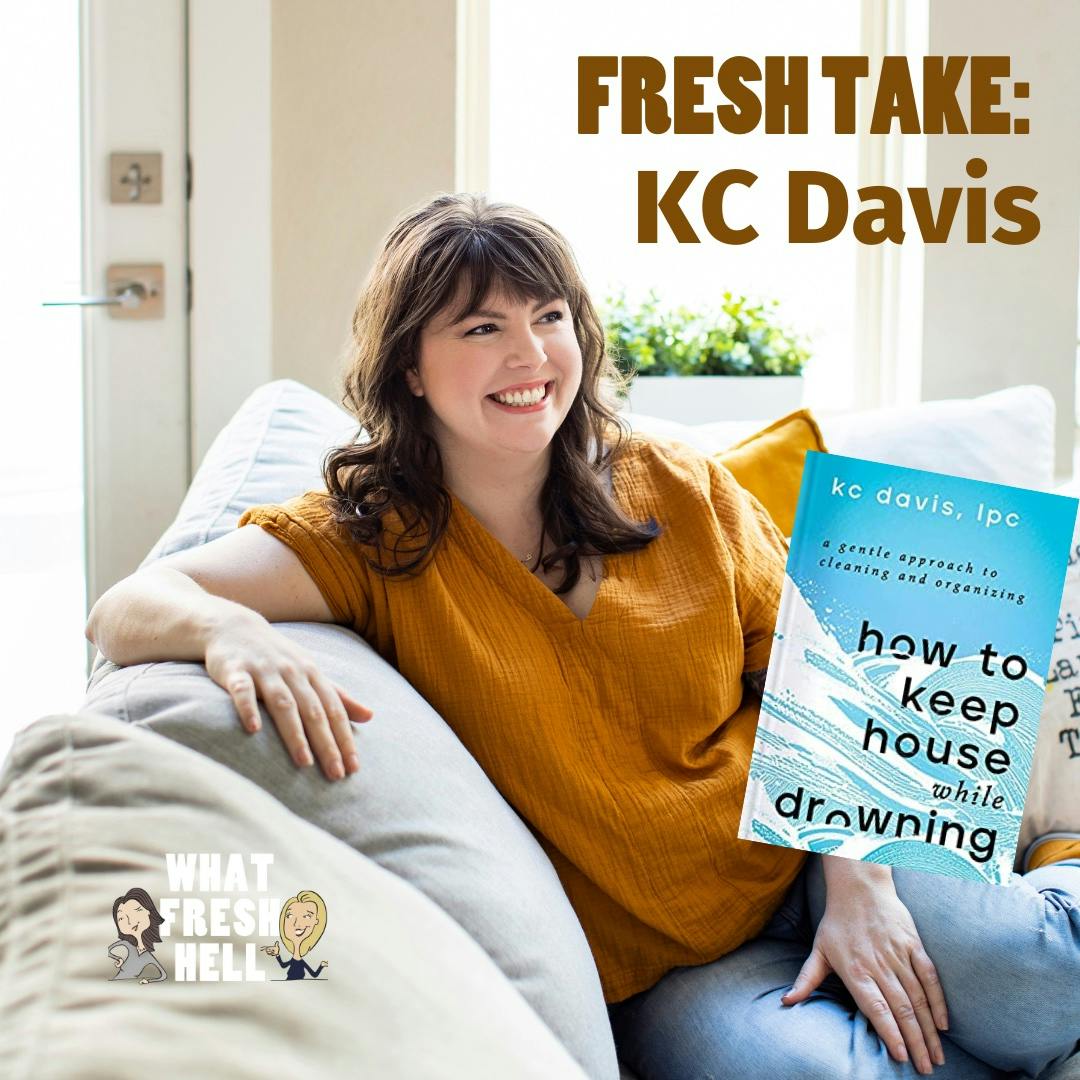
May 6, 2022
Fresh Take: KC Davis and the Gentle Approach to Cleaning and Organizing
KC Davis, author of the new book HOW TO KEEP HOUSE WHILE DROWNING, tells us how to move beyond stepping on LEGOs, confronting towers of dirty dishes, and feeling overwhelmed with a gentler method for home care and self-care.

258
May 4, 2022
BEST OF: Let It Go? Or No?
Still mad about that thing from that time? In this "Best Of" re-release, we review listener grudges large and small, deciding once and for all if those listeners should let it go or no. That’s not the same as whether they have a right to be annoyed.

April 29, 2022
Fresh Take: Iris Chen on "Untigering"
Iris Chen is a recovering tiger mother and founder of the Untigering movement, which emphasizes shifting away from parenting that is rooted in power to parenting that is grounded in partnership. Iris explains how to begin the untigering process.

April 28, 2022
BONUS: What We're Watching, Reading, and Listening To
From “Bridgerton” to “Invisible Kingdom” to “Maintenance Phase,” Amy and Margaret are keeping busy between What Fresh Hell episodes with podcasts, movies, TV shows, and a little bit of T Swift. (And no, the kids are not invited.)

April 27, 2022
Which Parenting Rules Can We Break?
Pacifiers in the crib. Juice in the sippy cup. Popsicles in the bathtub. We all have exceptions that we make to the so-called parenting “rules” in the interest of our own sanity. Our listeners share which parenting rules they break and why.

April 25, 2022
Ask Amy: My Kid Has Serious Separation Anxiety
Many of us have had the drop-off experience where our kid cries and just won't let go of us. How do we help our kids through separation anxiety and make them understand that we don’t go poof when we leave for work?

April 22, 2022
Fresh Take: Mary Laura Philpott on "Bomb Shelter"
You can think you’ve accounted for every variable as a parent, but then something happens that turns everything upside down. This week, Mary Laura Philpott, author of Bomb Shelter, discusses the unexpected variables in her life and how she copes.

254
April 20, 2022
When Our Partners Just Don't Get it
It was my husband. In the kitchen. With the dirty cup. AGAIN. Our partners do things that drive us mad. And sometimes it affects our parenting or our marriages. How do we make our partners truly understand what we need? Besides hiding all the cups?